
Tech
Enhancing Fleet Safety and Security with Truck Cameras


Aggregate companies face numerous challenges, including property damage claims and road incidents that can be costly and time-consuming to dispute. Fortunately, there’s a solution that can help mitigate these issues – dump truck cameras for vehicle surveillance. In this article, we’ll explore the benefits of using 4G LTE live-streaming connected mobile DVR cameras for dump trucks and how they can revolutionize the way you manage your fleet’s safety and security.
Dump Truck Cameras for Vehicle Surveillance
Property damage claims and roadway incidents can take a toll on businesses in the aggregate industry. These claims, whether legitimate or illegitimate, can result in financial losses and disputes. Dump truck cameras for vehicle surveillance offer a comprehensive solution by recording everything around the vehicle in near 360°, making it invaluable when disputing claims against your aggregate business.
Key Features:
– Comprehensive 360° coverage.
– Reliable 4G LTE live-streaming connectivity.
– 4-channel or 8-channel DVR for real-time footage viewing.
– Affordable pricing to suit your budget.
Side Cameras for Dump Trucks
Side view cameras are essential for any business in the aggregate industry. Roadway incidents and deliveries at job sites are common scenarios where having side cameras becomes crucial. Without them, you risk missing important video surveillance from your trucks’ sides.
Dash Cams for Dump Trucks with Optional Artificial Intelligence
Dash cameras are highly beneficial for dump trucks, especially in accidents where they can provide critical front-view footage. Dash cameras are equipped with optional artificial intelligence (AI) capabilities. These AI-powered cameras can detect, track, and alert managers about various driving behaviors, including distractions, texting, driver fatigue, forward collisions, following distance, and more. They serve as a proactive safety tool, helping prevent accidents before they happen.
Key Features:
– Front-view dash cams for accident recording.
– Optional driver-facing cameras.
– AI-powered technology for enhanced safety monitoring.
Dump Truck Backup Camera
Dump truck backup cameras go beyond the typical rearview camera. While they provide rearview functionality when the truck is in reverse, they also record footage continuously as the truck moves in any direction. The included dash monitor acts like a rearview mirror, offering comprehensive visibility. It’s the ultimate backup camera solution for dump trucks.
Key Features:
– Continuous recording in all directions.
– Dash monitor for comprehensive visibility.
Dump Truck Camera with GPS
Managing a fleet of dump trucks has never been easier, thanks to GPS cameras with built-in location tracking. With detailed trip history and real-time location tracking, you can monitor your fleet’s movements and video feeds through a single dashboard. This GPS fleet tracking system streamlines fleet management, enhances security, and improves overall efficiency.
Key Features:
– Real-time location tracking.
– Detailed trip history.
– Streamlined fleet management.
Conclusion
Investing in dump truck cameras for vehicle surveillance is a smart move for businesses in the aggregate industry looking to enhance safety, security, and efficiency. These cameras offer a comprehensive solution to property damage claims, accidents, and safety monitoring. With features like 4G LTE connectivity, AI-powered dash cams, and GPS tracking, you can take control of your fleet’s operations and protect your business from unnecessary disputes and losses. Upgrade your fleet with dump truck cameras and experience the difference in safety and security.


The annual Consumer Electronics Show (CES) is renowned for unveiling the latest innovations and futuristic technologies, and this year’s expo was no exception. Among the plethora of gadgets and tech marvels, autonomous construction equipment emerged as a standout theme, signaling a future that’s not just on the horizon but knocking at our doorstep.
Hyundai, a name synonymous with automotive excellence, stole the spotlight with the unveiling of the Concept X Excavator. This 15-foot marvel doesn’t just challenge the traditional norms of construction machinery; it revolutionizes them. Fully autonomous and lacking a driver’s cab, the Concept X Excavator is designed for precision and efficiency, powered by electrically driven, articulating tank feet. This design choice not only enhances its mobility across varied terrains but also underscores a commitment to eco-friendly construction practices.
The absence of a driver’s cab in the Concept X Excavator is a bold statement on the future of construction – a future where machines operate independently, guided by sophisticated AI and machine learning algorithms. This leap towards full autonomy promises to enhance safety, reduce operational costs, and increase efficiency on construction sites.

But Hyundai’s vision extends beyond excavators. The company revealed plans for a suite of fully autonomous construction machinery, including dump trucks and bulldozers. These vehicles are expected to work in harmony with the Concept X Excavator, creating a fully automated construction ecosystem. This approach not only showcases Hyundai’s innovative spirit but also its foresight in addressing the evolving needs of the construction industry.
The implications of autonomous construction equipment are vast. Beyond the immediate benefits of increased efficiency and safety, this technology heralds a significant shift in the construction landscape. It promises a future where projects are completed faster, with fewer errors and reduced human exposure to hazardous conditions. Moreover, it opens up new possibilities for construction in remote or challenging environments, where human operation is either risky or impractical.
As we reflect on the revelations from this year’s CES, it’s clear that the future of construction is not just approaching; it’s already here. The unveiling of the Concept X Excavator and Hyundai’s ambitious plans for an autonomous construction fleet underscore a transformative period in the industry. With these advancements, the construction site of tomorrow will look vastly different from today, marked by machines that work tirelessly, safely, and intelligently.
The journey towards fully autonomous construction machinery is still in its early days, but the message from CES is unmistakable: the future is closer than we think, and it’s filled with potential. As technology continues to evolve, so too will the landscapes we build, driven by innovation that reshapes the boundaries of what’s possible.

In an era where technological advancements redefine market landscapes overnight, Artificial Intelligence (AI) stands as a pivotal factor in determining business success. As we venture further into the 21st century, the question every business leader must ask is: “What would happen if my competitors successfully implemented AI solutions and I didn’t?” If the prospect of falling behind is daunting, perhaps even business-threatening, then the time to act is now. Waiting until AI becomes a universally accepted norm is a strategy that could leave your business struggling to survive in the wake of more innovative rivals.
The Risks of Delayed AI Implementation
- Competitive Disadvantage: In a world where your competitors harness AI for better customer insights, optimized operations, and enhanced decision-making, not keeping pace is akin to giving them a head start in a marathon. The gap only widens with time, making it increasingly challenging to catch up.
- Operational Inefficiencies: AI excels in streamlining operations, reducing costs, and maximizing efficiency. Without these advantages, your business faces the risk of operating with higher costs and lower efficiency, leading to reduced profitability.
- Customer Expectation and Experience: Today’s customers expect personalized, prompt, and seamless experiences. AI-powered solutions in customer service, recommendation systems, and personalized marketing are setting high standards that traditional methods struggle to meet.
- Data-Driven Decision Making: AI’s ability to analyze vast amounts of data for insights can revolutionize decision-making processes. Delaying AI adoption means continuing to make slower, less informed decisions.
Practical Examples of AI in Action
- ChatGPT for Text Summarization and Composing Letters: AI like ChatGPT can efficiently summarize large texts and assist in drafting professional letters, saving significant time and enhancing communication effectiveness.
- MidJourney for Logos: AI tools like MidJourney can create unique and appealing logos, streamlining the design process and providing a multitude of creative options.
- Motion: The Motion app uses artificial intelligence to automatically schedule and prioritize your tasks.
- Truck Sentry for Fleet Management: Truck Sentry AI excels in automating real-time monitoring of your materials hauling fleet, offering paperless ticketing, project management, and billing. This not only enhances operational efficiency but also ensures better project tracking and financial management.
AI is Not Just for the Tech Giants The misconception that AI is only for tech giants is a dangerous pitfall. AI tools and technologies are increasingly accessible to businesses of all sizes. Startups and SMEs are leveraging AI for various purposes, from enhancing customer engagement to optimizing supply chains.
Start Small, But Start Now Embarking on an AI journey does not mean a complete overhaul of your current systems. Start small with achievable projects, like chatbots for customer service or AI for inventory management. The key is to begin the journey, learn, and scale up.
Conclusion The question of AI adoption is no longer ‘if’ but ‘when’. If the thought of your competitors leveraging AI concerns you, then the time to act is now. AI is rapidly moving from a competitive advantage to a basic necessity for survival in the business landscape. The choice is clear: innovate or risk obsolescence. Don’t wait to be overtaken; embrace AI and secure your place in the future of business.
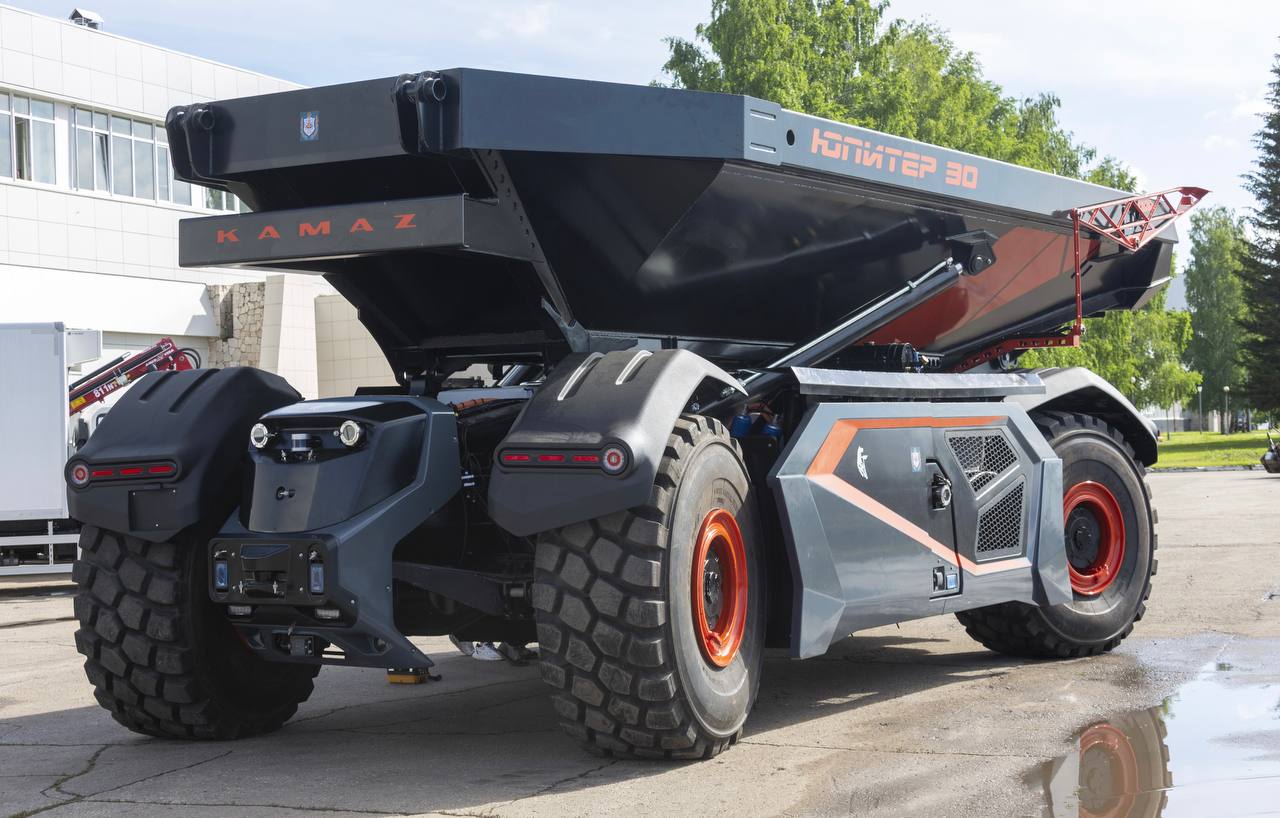
In the world of heavy machinery and mining, innovation is the key to efficiency and safety. Enter the KAMAZ-6559, a revolutionary unmanned dump truck designed by the Scientific and Technical Center of KAMAZ, specifically tailored for autonomous operations in quarries. This groundbreaking vehicle, known as Jupiter 30, has taken the concept of autonomous heavy-duty transport to a whole new level. In this blog article, we’ll delve into the fascinating details of this remarkable creation and its potential impact on the mining industry.
A New Frontier in Quarry Operations
The KAMAZ-6559, affectionately dubbed “Jupiter 30,” represents the latest evolution in KAMAZ’s line of mining dump trucks. What sets this vehicle apart is its complete autonomy, meaning it operates without a human driver. As a result, there is no need for a conventional driver’s cab, significantly enhancing safety in hazardous quarry environments.
Sergey Nazarenko, Chief Designer of Innovative Vehicles at the Research and Development Center of KAMAZ PTC, explained, “Jupiter was originally designed as an autonomous vehicle for quarry operations. It was equipped with all the necessary devices. It has special video cameras protected from dust, dirt, moisture, and vibrations, 2D and 3D lidars, ultrasound sensors, radars. There are also GSM antennas and GPS/GLONASS navigation. Both axles are swivel, so the vehicle has good maneuverability.”
The Power Behind the Autonomy
Under the hood, the Jupiter 30 is driven by a KAMAZ in-line six-cylinder engine with a capacity of 11.9 liters. This engine powers an electric generator, which, in turn, provides energy to the traction motor and charges the traction batteries. The all-wheel drive system is achieved through two traction electric motors—one per axle—delivering remarkable traction and stability.
Impressive Specifications
The KAMAZ-6559 is no lightweight in terms of performance and capacity. It boasts a length of 8,769 mm, a width of 2,709 mm, and a height of 3,499 mm. Despite its substantial size, the curb weight of the chassis is 23 tonnes. Both the front and rear axles can shoulder up to 25 tonnes each, while the truck itself can transport a payload of up to 30 tonnes with ease. Whether operating in fully automatic mode or under remote control, the Jupiter 30 maintains a top speed of 56 kph, making it a formidable workhorse in any quarry setting.
The Human Touch
While the KAMAZ-6559 operates autonomously, human supervision remains crucial for overseeing loading and unloading operations. An operator ensures that the vital tasks associated with moving heavy materials are performed seamlessly and safely, maintaining a delicate balance between automation and human control.
A Glimpse into the Future
The KAMAZ-6559, with its factory index “KAMAZ-6559,” represents a promising step forward in the world of heavy machinery. Although its official presentation is yet to be confirmed by the development company, the vehicle’s innovative design showcases the potential for greater safety, efficiency, and productivity in the mining industry.
With its ability to navigate rugged quarry terrain, its autonomous capabilities, and its substantial carrying capacity, the KAMAZ-6559 Jupiter 30 is poised to transform the way we approach quarry operations. As technology continues to advance, the mining industry is embracing automation and innovation, making a safer and more efficient future a reality.

The Future of Construction: Autonomous Equipment Takes Center Stage at CES

The Urgent Imperative of AI Adoption: Don’t Let Your Business Fall Behind

Dump Truck vs Tractor Trailer Driving

A Comprehensive Guide to Dump Trucks: Types, Purposes, and Key Models

The World’s Biggest Dump Truck: A Behemoth on Wheels
TriAxle vs Single Axle vs Tandem Axle Dump Trucks: What is Best for You?
-
 Tech3 years ago
A Comprehensive Guide to Dump Trucks: Types, Purposes, and Key Models
-
 Uncategorized2 years ago
The World’s Biggest Dump Truck: A Behemoth on Wheels
-
Business3 years ago
TriAxle vs Single Axle vs Tandem Axle Dump Trucks: What is Best for You?
-

 Tech3 years ago
Leaf Springs vs. Air Bag Suspensions on Dump Trucks: Which is Right for You?
-

 Business3 years ago
Top 4 Class 8 Dump Truck Brands: A Comprehensive Review
-
 Uncategorized2 years ago
Dump Truck vs Tractor Trailer Driving
-

 Business2 years ago
Used vs New Dump Truck Purchase
-

 Uncategorized2 years ago
Managing Maintenance Costs and Strategy for Used Dump Trucks