
Uncategorized
Managing Maintenance Costs and Strategy for Used Dump Trucks


Maintaining a used dump truck is essential to ensure it operates efficiently and has a long lifespan. However, the cost of maintenance can vary significantly based on several factors. To effectively manage these costs, it’s crucial to have a well-thought-out maintenance strategy and budget in place. In this article, we’ll explore the key considerations for estimating maintenance costs for a used dump truck and outline steps to develop a maintenance strategy and budget.
Estimating Maintenance Costs for Used Dump Trucks:
When assessing the maintenance costs for a used dump truck, it’s important to consider various factors:
- Age and Mileage: Older dump trucks with higher mileage tend to require more maintenance due to increased wear and tear on critical components.
- Maintenance History: A well-documented service history can reduce surprises and lower maintenance costs, making it important to know the truck’s maintenance background.
- Usage: The type and intensity of use impact maintenance costs, especially for dump trucks carrying heavy loads or operating in rugged terrain.
- Components and Systems: Dump trucks have multiple components and systems, each with its maintenance requirements. These include the engine, transmission, hydraulics, suspension, tires, and brakes.
- Preventive Maintenance: Regular preventive maintenance, such as oil changes, fluid flushes, and inspections, can help reduce the risk of major breakdowns and extend the truck’s lifespan.
- Repairs and Replacements: Unexpected breakdowns and the need for repairs or component replacements can result in significant costs.
- Labor Costs: Labor costs for maintenance and repairs vary by location and complexity of work, significantly impacting overall maintenance expenses.
- OEM vs. Aftermarket Parts: The choice between original equipment manufacturer (OEM) parts and aftermarket parts can affect maintenance costs. While OEM parts are generally more expensive, they may offer better reliability and warranty support.
- Local Regulations: Compliance with local regulations, such as emissions standards or safety inspections, may require additional maintenance or retrofitting of the truck, incurring extra costs.
- Regular Inspections: Regular inspections by a qualified mechanic can help identify potential issues early, preventing costly breakdowns.
To estimate maintenance costs effectively, it’s advisable to perform a thorough inspection before purchase and obtain a maintenance history if available. Additionally, budgeting for ongoing preventive maintenance and setting aside funds for unexpected repairs can help manage maintenance expenses and ensure the longevity and reliability of your used dump truck.
Developing a Maintenance Strategy and Budget:
Creating a maintenance strategy and budget is essential to ensure your dump truck remains reliable over its lifespan. Here’s a step-by-step guide:
- Assessment of Maintenance Needs: Assess the specific maintenance needs of your dump truck, considering its age, usage, and past maintenance history.
- Maintenance Schedule: Create a maintenance schedule outlining when various maintenance tasks should be performed, differentiating between routine preventive maintenance and less frequent inspections or overhauls.
- Budget Estimation: Estimate costs for each maintenance task, including labor, parts, and other expenses. Consider potential inflation in costs over time.
- Prioritization: Prioritize maintenance tasks based on criticality, allocating a larger portion of your budget to critical items.
- Contingency Fund: Set aside funds for unexpected repairs and breakdowns.
- Tracking and Record Keeping: Implement a system for tracking maintenance activities and expenses and keep records of all work performed.
- Regular Inspections: Include regular inspections to identify potential issues early.
- Review and Adjustment: Periodically review your maintenance strategy and budget to ensure they align with your truck’s needs and adjust as necessary.
- Training and Skill Development: Ensure maintenance personnel are well-trained and skilled for efficient task execution.
- Adherence to Regulations: Stay informed and compliant with local regulations related to maintenance, emissions, and safety standards.
- Long-Term Planning: Consider the dump truck’s long-term lifespan and budget for major overhauls or replacements.
- Regular Monitoring: Continuously monitor maintenance activities and budget to identify trends and areas for improvement.
By following these steps and implementing a well-defined maintenance strategy and budget, you can ensure your used dump truck remains in optimal working condition, minimize downtime, and effectively manage maintenance costs throughout its lifespan. Proper maintenance is not just an expense but an investment in the longevity and reliability of your equipment.

In the vast world of trucking, two distinct roles stand out: dump truck driving and tractor-trailer driving, each with its unique set of responsibilities, vehicle types, and working conditions. If you’re considering a career in trucking or simply curious about the differences between these roles, this article is your comprehensive guide to understanding the contrasts and similarities between dump truck driving and tractor-trailer driving.
Dump Truck Driving:
- Vehicle Type: Dump trucks are characterized by their compact size and specialized design, ideal for transporting loose materials like sand, gravel, dirt, or construction debris. They feature a rear dump bed that can be raised to unload cargo quickly.
- Job Responsibilities: Dump truck drivers typically engage in short-haul, local, or regional routes, often within construction or excavation sites. Their duties include loading and unloading cargo using the truck’s hydraulic dump bed. Dump truck drivers often navigate off-road or rough terrain environments, making maneuverability an essential skill.
- Working Conditions: Dump truck driving is synonymous with frequent stops and starts, especially within construction zones. Drivers often collaborate closely with construction crews and equipment operators. Furthermore, the weather and terrain can significantly impact their work, given their common involvement in construction and excavation projects.
- Lifestyle: Dump truck drivers tend to enjoy more predictable schedules, with fewer long-haul trips. This often allows them to return home daily, contributing to a more stable work-life balance.
Tractor-Trailer Driving:
- Vehicle Type: Tractor-trailers, colloquially known as semi-trucks or big rigs, consist of a tractor (front) and a trailer (rear). They are designed for long-haul, over-the-road transportation.
- Job Responsibilities: Tractor-trailer drivers have a diverse range of responsibilities. They transport various goods, including dry cargo, refrigerated items, and even hazardous materials. Long-haul drivers cover extensive distances, sometimes spanning multiple states or even coast-to-coast routes. Notably, loading and unloading cargo are typically handled by separate personnel at shipping and receiving locations.
- Working Conditions: Tractor-trailer drivers embark on extended journeys, covering hundreds or even thousands of miles in a single trip. They must navigate various weather conditions, contend with traffic, and face diverse road challenges during their long-haul journeys.
- Lifestyle: Long-haul truckers often experience irregular schedules, including overnight stays in their trucks or at truck stops. Their lifestyle can be somewhat nomadic, with drivers spending substantial periods away from home.
Key Differences:
- Cargo Type: Dump truck drivers primarily transport bulk materials within a specific area, while tractor-trailer drivers handle a wide array of cargo types and traverse extensive distances.
- Terrain: Dump truck driving frequently involves off-road or construction site work, whereas tractor-trailer driving is predominantly on highways and interstates.
- Scheduling: Dump truck drivers often enjoy more regular hours and the opportunity to return home daily, whereas tractor-trailer drivers typically contend with irregular schedules and extended time on the road.
- Cargo Handling: Dump truck drivers take responsibility for loading and unloading their cargo, while tractor-trailer drivers typically have others handle these tasks.
In the end, the choice between dump truck driving and tractor-trailer driving hinges on individual preferences, lifestyle considerations, career aspirations, and the specific appeal of each trucking role. Both professions offer unique challenges and rewards within the broader trucking industry, making them valuable contributions to the world of transportation and logistics.

Dump trucks are a common sight on construction sites, mines, and even on our roads. These massive vehicles are designed to carry heavy loads, and their ability to stop safely is crucial for the safety of the driver, other road users, and pedestrians. But what factors influence the stopping distance of a dump truck? Let’s dive into the physics behind it.
1. The Role of Load
Weight and Momentum
The weight of a dump truck plays a significant role in its stopping distance. A loaded dump truck has more momentum than an empty one. Momentum, in simple terms, is the product of an object’s mass and its velocity. The greater the momentum, the more force is required to bring the vehicle to a stop.
Brake Efficiency
The efficiency of a truck’s brakes is also impacted by the load. Brakes work by converting kinetic energy into heat. A heavier truck has more kinetic energy, requiring the brakes to dissipate more heat. If the brakes are not designed to handle such loads, they can overheat, reducing their efficiency and increasing stopping distances.
2. Tire Conditions and Road Surface
The condition of the truck’s tires and the road surface can significantly impact stopping distances. Worn-out tires have less tread, reducing traction and increasing the likelihood of skidding. Similarly, wet or icy road conditions can reduce the friction between the tires and the road, leading to longer stopping distances.
3. Speed
The speed at which a dump truck is traveling directly impacts its stopping distance. The kinetic energy of a moving object is proportional to the square of its speed. This means that a truck traveling at 60 mph has four times the kinetic energy of one traveling at 30 mph. Consequently, the faster the truck is moving, the longer it will take to stop.
4. Brake Maintenance
Regular maintenance of a dump truck’s braking system is crucial. Over time, brake pads can wear out, brake fluid can degrade, and other components can become less effective. A well-maintained braking system can respond quickly and efficiently, reducing stopping distances.
5. Driver Reaction Time
The time it takes for a driver to react to a situation and apply the brakes also contributes to the stopping distance. Factors such as fatigue, distractions, or impaired driving can increase reaction times, leading to longer stopping distances.
6. Downhill vs. Uphill
The gradient of the road can also impact stopping distances. A dump truck traveling downhill has the added force of gravity working with its momentum, making it harder to stop. Conversely, a truck traveling uphill has gravity working against its momentum, which can aid in stopping.
Conclusion
Stopping a dump truck is a complex interplay of physics, vehicle design, maintenance, and human factors. Understanding these factors can help in designing safer trucks, planning better road infrastructure, and training drivers to operate these vehicles safely. Whether you’re a driver, a fleet manager, or just a curious reader, it’s essential to appreciate the challenges and intricacies of bringing these massive vehicles to a halt.
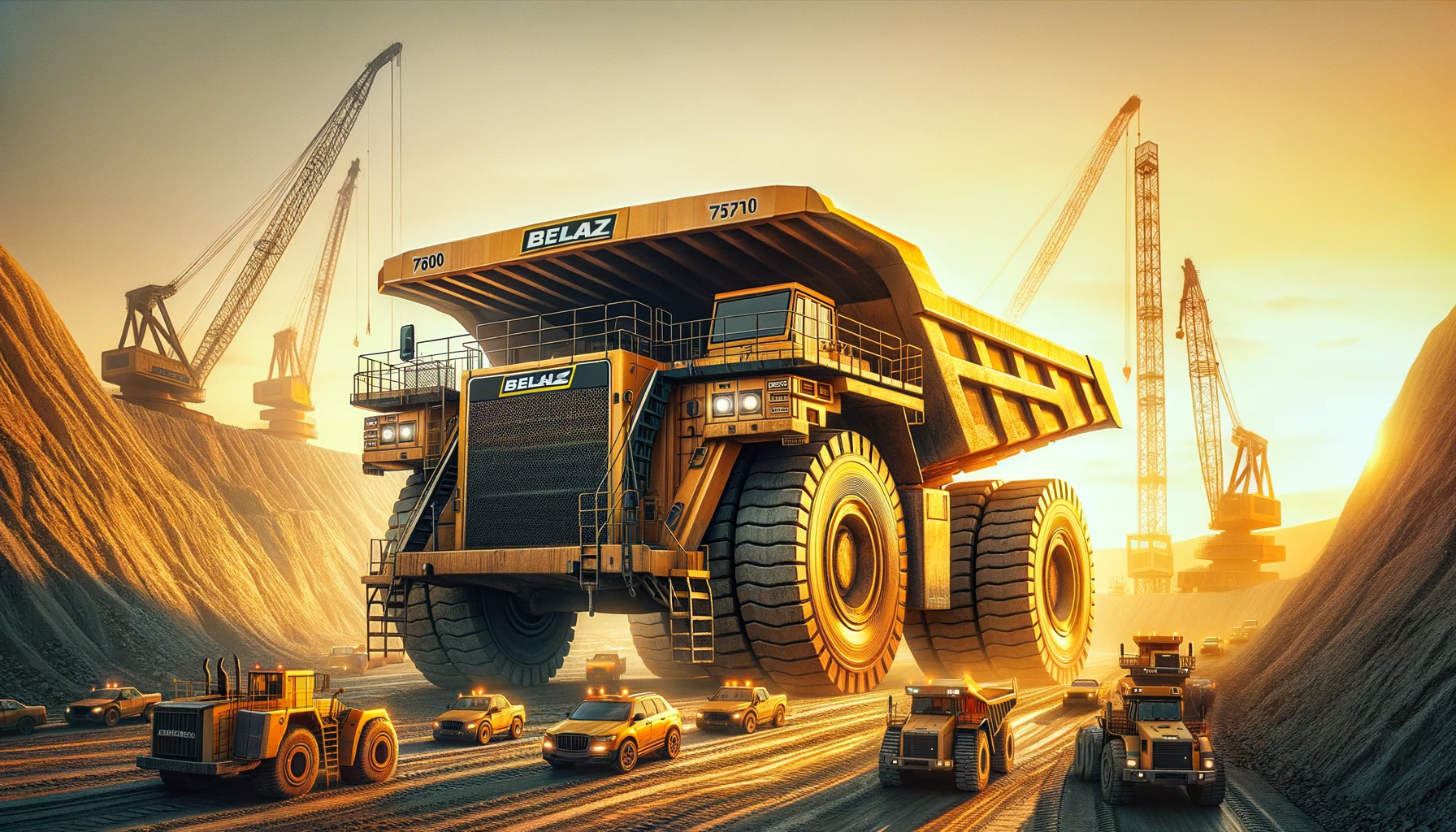
When we think of dump trucks, we often picture the ones we see on construction sites or on the road, carrying loads of dirt or gravel. But have you ever wondered how big dump trucks can get? Enter the world of ultra-class dump trucks, where size and capacity are taken to the extreme. Among these giants, one stands out as the biggest dump truck in the world. Let’s dive into the fascinating world of this colossal machine.
Introducing the BelAZ 75710
The title of the world’s largest dump truck goes to the BelAZ 75710, a monstrous vehicle manufactured by the Belarusian company BelAZ. This behemoth is truly a marvel of engineering and design.
Key Specifications:
- Payload Capacity: 450 metric tons
- Empty Weight: 360 metric tons
- Length: 20.6 meters (67.5 feet)
- Width: 9.87 meters (32.4 feet)
- Height: 8.165 meters (26.8 feet)
- Top Speed: 64 km/h (40 mph)
- Engine: Two 16-cylinder diesel engines, producing a combined 4,600 horsepower
What Makes the BelAZ 75710 So Special?
1. Unmatched Carrying Capacity:
The BelAZ 75710 can carry a staggering 450 metric tons in its dump body. That’s equivalent to carrying around 300 small cars!
2. Twin Power:
Unlike most dump trucks which have one engine, the BelAZ 75710 is powered by two massive 16-cylinder diesel engines. This gives it the necessary power to move its enormous payload.
3. Eco-Friendly Design:
Despite its size, the BelAZ 75710 is designed to be eco-friendly. It uses an electromechanical transmission that helps reduce fuel consumption and emissions.
4. Maneuverability:
For its size, the BelAZ 75710 is surprisingly maneuverable. It uses eight large-size Michelin tubeless pneumatic tires and has a turning radius of about 20 meters.


The Role of the BelAZ 75710 in Mining
The primary purpose of the BelAZ 75710 is to transport ore and other materials in large open-pit mines. Its massive capacity means fewer trips are needed to move the same amount of material, leading to increased efficiency and reduced operational costs for mining companies.
Conclusion
The BelAZ 75710 is not just a dump truck; it’s a testament to human ingenuity and the endless quest to push the boundaries of what’s possible. While it’s unlikely you’ll see one of these giants on your local highway, they play a crucial role in some of the world’s largest mining operations, helping to extract valuable resources that power our modern world.
So, next time you see a regular dump truck, remember that there’s a much bigger brother out there, working tirelessly in a mine, and holding the title of the world’s biggest dump truck.


The Future of Construction: Autonomous Equipment Takes Center Stage at CES

The Urgent Imperative of AI Adoption: Don’t Let Your Business Fall Behind

Dump Truck vs Tractor Trailer Driving

A Comprehensive Guide to Dump Trucks: Types, Purposes, and Key Models

The World’s Biggest Dump Truck: A Behemoth on Wheels
TriAxle vs Single Axle vs Tandem Axle Dump Trucks: What is Best for You?
-
 Tech2 years ago
A Comprehensive Guide to Dump Trucks: Types, Purposes, and Key Models
-
 Uncategorized2 years ago
The World’s Biggest Dump Truck: A Behemoth on Wheels
-
Business2 years ago
TriAxle vs Single Axle vs Tandem Axle Dump Trucks: What is Best for You?
-

 Business2 years ago
Top 4 Class 8 Dump Truck Brands: A Comprehensive Review
-

 Tech2 years ago
Leaf Springs vs. Air Bag Suspensions on Dump Trucks: Which is Right for You?
-
 Uncategorized2 years ago
Dump Truck vs Tractor Trailer Driving
-

 Business2 years ago
Used vs New Dump Truck Purchase
-

 Uncategorized2 years ago
The Physics of Stopping a Dump Truck: How Load and Other Factors Play a Role